

Why install Planka with Web.Casa?
No manual Docker Compose needed. Web.Casa configures and starts everything.
Caddy auto-provisions SSL certificates. Reverse proxy works out of the box.
Monitoring, backups, updates, logs — manage all apps from one panel.
How to Install
Install Web.Casa first, then one-click install this app from the App Store.
Planka
Elegant open source project tracking
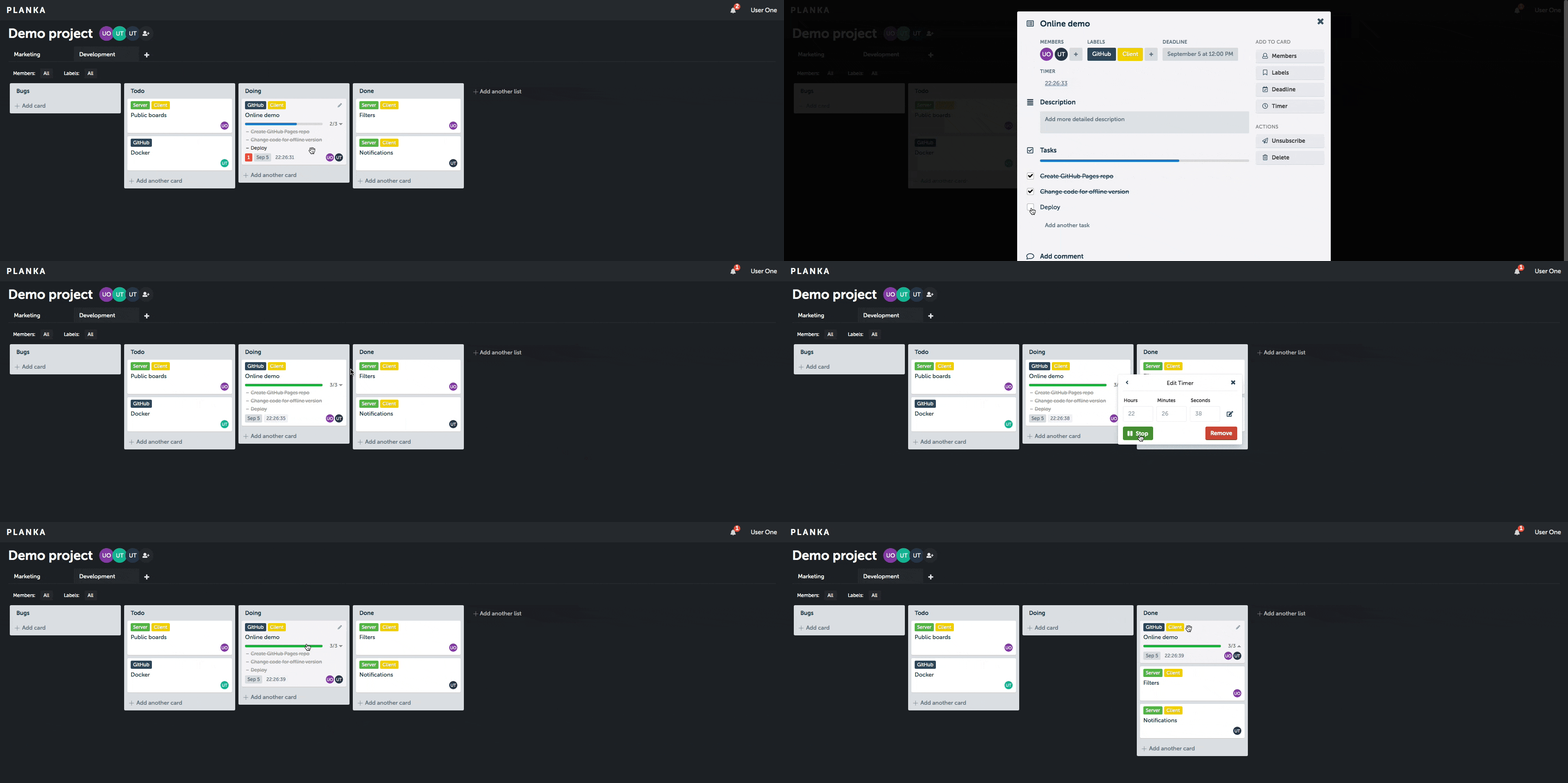
Client demo (without server features).
Features
- Create projects, boards, lists, cards, labels and tasks
- Add card members, track time, set a due date, add attachments, write comments
- Markdown support in a card description and comment
- Filter by members and labels
- Customize project background
- Real-time updates
- User notifications
- Internationalization
Tech stack
- React, Redux, Redux-Saga, Redux-ORM, Semantic UI React, react-beautiful-dnd
- Sails.js, Knex.js
- PostgreSQL
Username and Password
After installing login with these credentials:
- Username: [email protected]
- Password: demo
FAQ
Can I install Planka on Web.Casa?
Yes, Planka is available in the Web.Casa App Store. You can install it with one click from the Web.Casa panel — no need to manually write Docker Compose files or configure reverse proxies.
How do I install Planka on Web.Casa?
First install Web.Casa with curl -fsSL https://get.web.casa | bash, then search for "Planka" in the App Store and click install. Web.Casa automatically configures the Docker container, assigns ports, and sets up a Caddy reverse proxy.
What is the default port for Planka on Web.Casa?
The default port for Planka on Web.Casa is 8016. You can bind it to a custom domain through Web.Casa's Caddy reverse proxy, which automatically provisions HTTPS certificates.
Does Planka get automatic HTTPS after installation?
Yes. Web.Casa is built on Caddy, so after installing the app, simply bind a domain and Caddy will automatically provision and renew SSL certificates via Let's Encrypt — no manual configuration needed.
How do I back up Planka data?
Web.Casa has a built-in backup plugin that supports automatic backups of Planka data to local storage, S3, WebDAV, or SFTP. You can configure scheduled snapshots and retention policies to keep your data safe.


